Why GPS Tracking Has Become Essential for Modern Businesses
Businesses today run on information. Whether it’s knowing exactly where a delivery truck is, how long a job site visit took, or which vehicle is closest to a new service call, fast access to accurate data is what separates efficient operations from chaotic ones.
GPS tracking used to be seen as a tool for large trucking fleets, something only logistics giants needed. That’s changed. Small businesses, contractors, delivery services, and field teams now rely on GPS tracking just as much as enterprise fleets because the same pressures, rising costs, tighter margins, and higher customer expectations apply across the board.
This article breaks down what GPS tracking actually does, why so many businesses are adopting it, and what to look for if you’re considering it for your own operation.
What Is GPS Tracking and How Does It Work?
At its core, GPS tracking uses satellite signals to determine the precise location of a vehicle, asset, or device. A small tracker, usually installed in a vehicle or attached to equipment, communicates with GPS satellites to calculate its position, then transmits that data to a cloud-based platform or app.
There are two main types of tracking businesses use:
- Real-time tracking sends location updates continuously or at short intervals, allowing managers to see exactly where vehicles and assets are at any given moment.
- Passive tracking records location data over time and uploads it later, often used for historical reporting rather than live monitoring.
Most modern business GPS systems combine both, giving companies live visibility along with detailed trip history for reporting and analysis. Common applications include fleet tracking, equipment monitoring, delivery route management, and field service dispatching.
Why More Businesses Are Investing in GPS Tracking
Several shifts in how businesses operate have made GPS tracking far more than a “nice to have.”
The growing need for visibility and operational control comes first. As companies scale, it becomes harder to know what’s happening across multiple vehicles, job sites, or service areas without real-time data. GPS tracking closes that gap.
Rising fuel costs and operational expenses matter too. With fuel prices remaining a major line item for any business with vehicles, even small improvements in route efficiency add up quickly across a fleet.
There’s also increased demand for customer transparency. Customers expect accurate delivery windows and real-time updates, similar to what they experience with major delivery services. Businesses without this capability often fall behind.
Finally, the expansion of mobile workforces plays a role. More employees work from vehicles, job sites, or remote locations than ever before. Managing a distributed team without location data makes scheduling and accountability far more difficult.
Improved Fleet Visibility and Vehicle Management
Real-Time Vehicle Monitoring
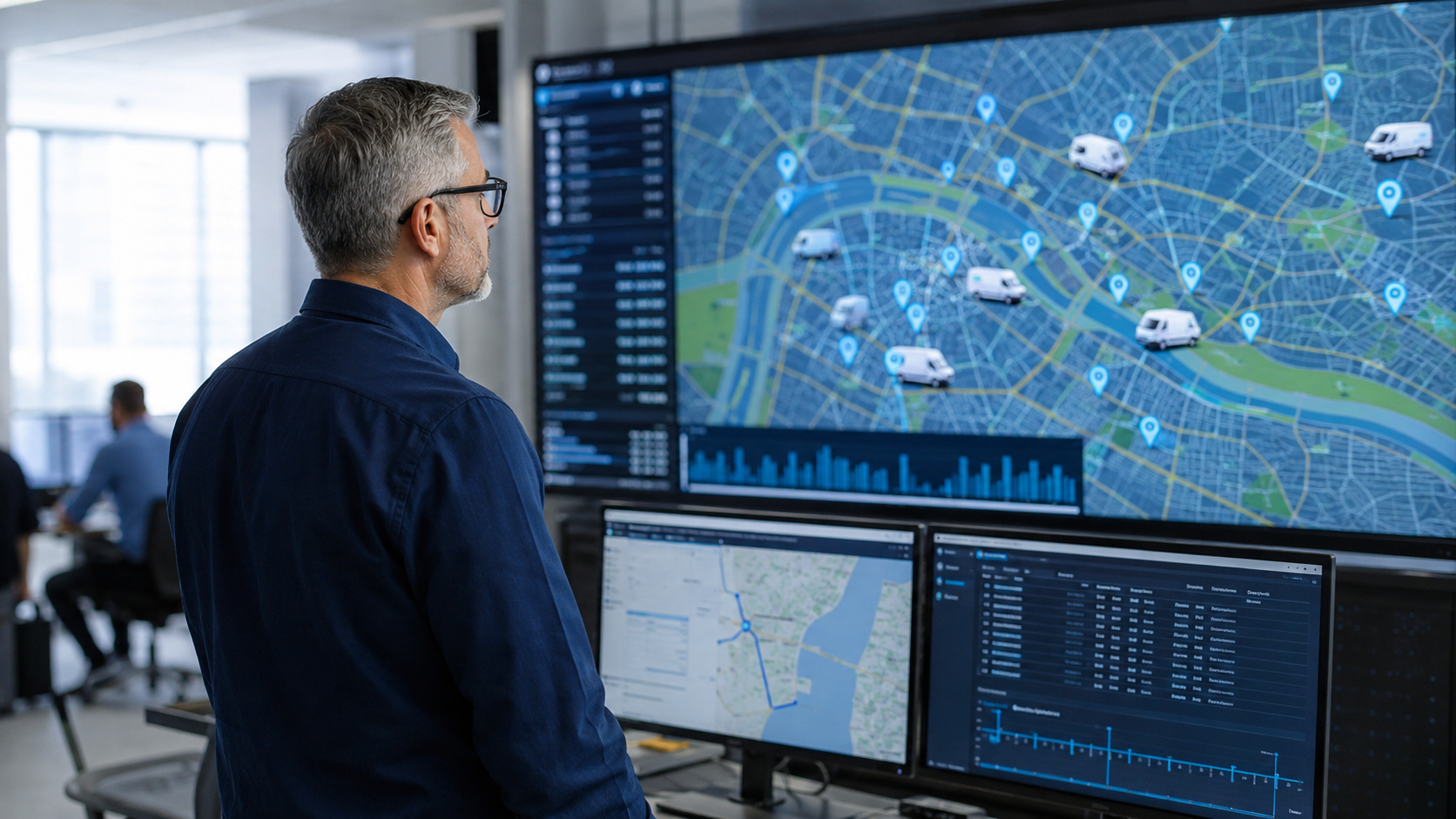
With GPS tracking, managers can see exactly where every vehicle is at any moment. This makes dispatching faster and more accurate, since jobs can be assigned to the vehicle that’s actually closest, rather than relying on guesswork or outdated check-ins.
Real-time GPS tracker also improves route planning. Dispatchers can adjust routes on the fly based on traffic, weather, or last-minute job changes, keeping schedules realistic instead of falling apart by midday.
Smarter Resource Allocation
Beyond simply seeing where vehicles are, GPS tracking helps businesses use their resources more efficiently. Jobs can be assigned based on proximity rather than which driver happens to be “next in line,” cutting down on unnecessary travel time.
This also reduces downtime between assignments. Instead of vehicles sitting idle while dispatchers figure out who’s available, GPS data makes it easy to identify the right vehicle for the next job immediately.
Reduced Fuel Costs and Operating Expenses
Eliminating Unnecessary Mileage
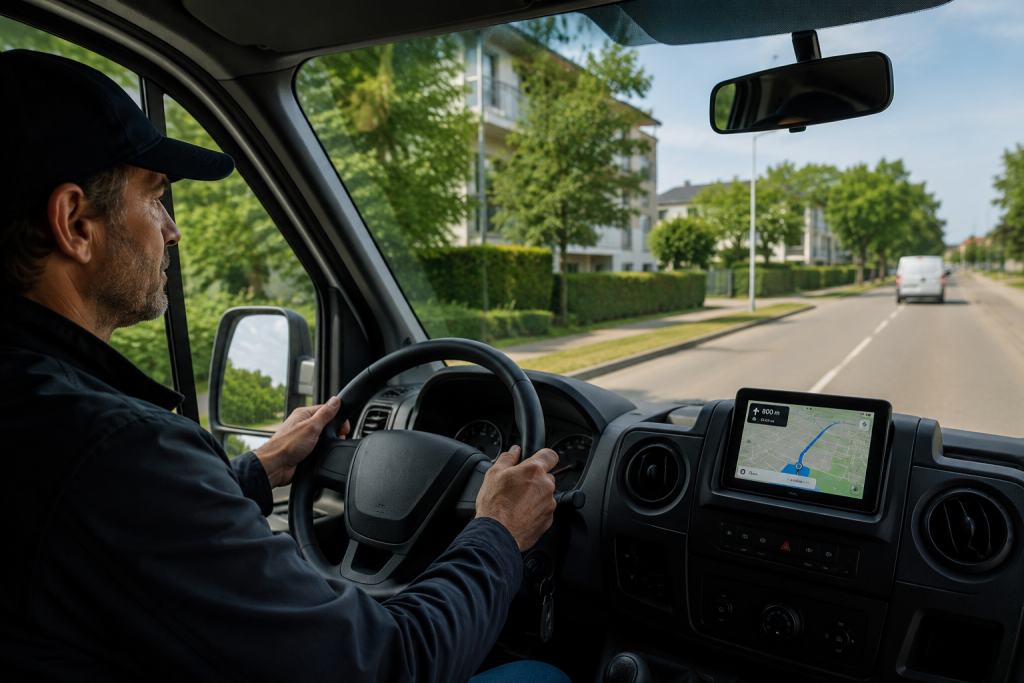
One of the most immediate benefits of GPS tracking is the ability to identify inefficient routes. Over time, drivers can fall into habits, longer routes, unnecessary stops, or repeated detours that quietly add up in fuel and labor costs. With route data in hand, businesses can identify these patterns and adjust accordingly, reducing excessive driving without needing to micromanage every trip.
Monitoring Driver Behavior
Driver behavior has a direct impact on fuel consumption and vehicle wear. GPS tracking systems can flag patterns like the following:
- Speeding
- Excessive idling
- Harsh braking
None of these require constant supervision to address. Simply having visibility into these patterns, and sharing that data with drivers, often leads to noticeable improvements in both safety and fuel efficiency.
Lower Maintenance Costs
GPS tracking systems often integrate mileage and usage data with maintenance scheduling. This allows businesses to schedule preventive maintenance based on actual vehicle usage rather than guesswork, helping reduce unexpected breakdowns that can derail a day’s schedule and lead to costly repairs.
Enhanced Employee Accountability
Better Time Management
GPS tracking provides a clear, automatic record of arrival and departure times at job sites. This removes the need for manual time logs and gives managers an accurate picture of how time is actually being spent in the field. That data also improves scheduling accuracy going forward, since managers who know how long jobs typically take in practice can build more realistic schedules instead of relying on estimates.
Increased Productivity
With better visibility into field operations, managers can identify where time is being lost and adjust accordingly. GPS tracking also helps reduce unauthorized vehicle use, such as personal errands during work hours, which can have a meaningful impact on both costs and productivity over time.
Stronger Asset and Vehicle Protection
Theft Prevention
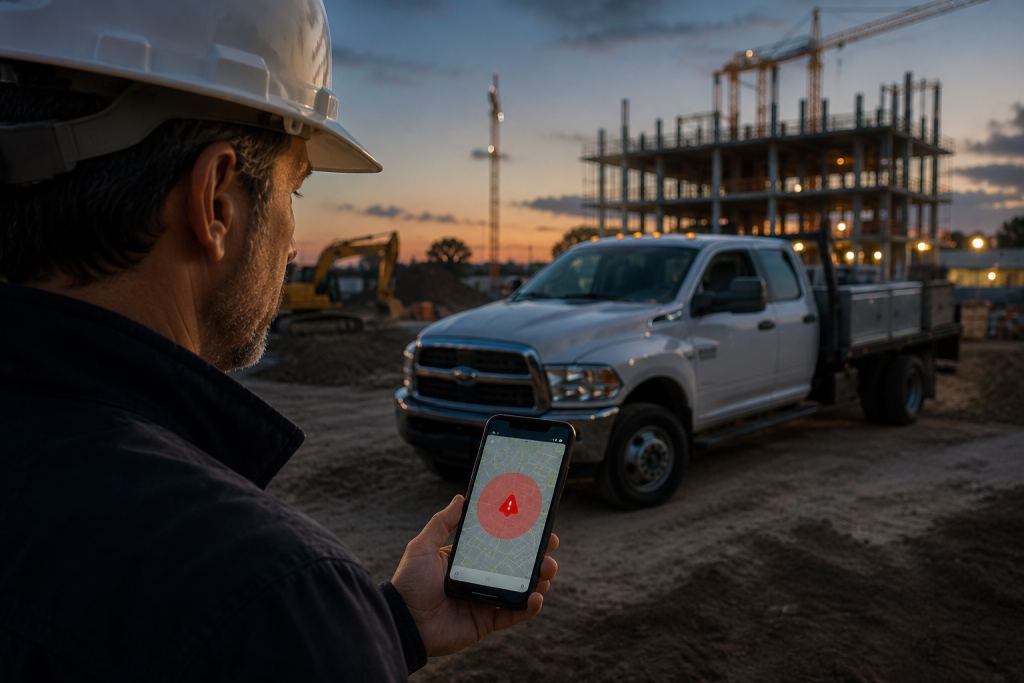
For businesses with valuable vehicles or equipment, GPS tracking adds a layer of protection that wasn’t previously possible. Real-time location monitoring means unusual movement, like a vehicle being used outside normal hours or leaving a designated area, can trigger instant alerts.
Faster Recovery of Stolen Assets
If a vehicle or piece of equipment is stolen, GPS tracking dramatically improves the odds of recovery. Knowing the real-time location allows businesses to act quickly and provide accurate information to authorities, often minimizing financial losses that would otherwise be permanent.
Better Customer Service and Satisfaction
Accurate Arrival Estimates
Customers increasingly expect to know when a service technician, delivery, or driver will arrive, not a vague window but a realistic estimate. GPS tracking makes this possible by providing live location data that can be used to generate accurate ETAs and improve communication with customers throughout the process.
Faster Response Times
When a new request comes in, GPS tracking allows businesses to dispatch the closest available vehicle rather than the next one in a queue. This leads to faster response times and helps resolve service requests more efficiently, both of which directly affect customer satisfaction.
Compliance and Risk Management Benefits
Electronic Records and Reporting
GPS tracking systems automatically maintain accurate trip histories, which can simplify reporting requirements significantly. Instead of manually compiling logs, businesses can pull detailed records directly from the system when needed for audits, client reporting, or internal review.
Supporting Safety Programs
The same data used for efficiency can also support safety initiatives. By identifying patterns in driver behavior, businesses can encourage safer driving habits across their fleet, which in turn helps reduce accident-related risks and the costs that come with them.
Industries That Benefit Most From GPS Tracking
For companies moving goods across regions, transportation and logistics are where GPS tracking is foundational. A regional trucking company, for example, can use real-time tracking to monitor delivery progress, optimize multi-stop routes, and provide clients with accurate shipment updates.
- Construction companies often manage expensive equipment across multiple job sites. GPS tracking helps a contractor keep tabs on excavators, generators, and trailers, reducing theft risk and making it easier to know which equipment is available for the next project.
- Field service businesses like HVAC, plumbing, and electrical companies rely heavily on scheduling efficiency. GPS tracking allows them to dispatch the nearest technician to an urgent call, cutting response time and improving first-visit resolution rates.
- For businesses handling frequent local deliveries, delivery services use GPS tracking to support accurate ETAs and route optimization. A local courier service, for instance, can balance driver workloads and keep delivery windows realistic during high-demand periods.
- Utility and maintenance providers often manage large service areas with unpredictable call volumes. GPS tracking helps them dispatch crews efficiently during outages or emergencies, where response time directly affects customer impact.
Common Myths About GPS Tracking
The idea that GPS tracking is only for large companies used to be closer to true, back when systems required expensive hardware and complex installations. Today, GPS tracking solutions are scalable, with options designed specifically for small businesses managing just a handful of vehicles.
Cost is another common concern. While there is an investment involved, the savings from reduced fuel waste, lower maintenance costs, and improved scheduling efficiency often offset that cost relatively quickly. For many businesses, the bigger cost is operating without this visibility at all.
Privacy is probably the most sensitive myth. Most business GPS tracking focuses on company vehicles and assets during work hours, not personal monitoring. Many businesses address this directly by being transparent with employees about what’s tracked, when, and why, which tends to reduce concerns significantly.
What to Look for in a Business GPS Tracking Solution
Not all GPS tracking systems are built the same way. When evaluating options, businesses should consider the following:
- Real-time tracking with reliable update frequency
- Geofencing to monitor specific zones or routes
- Maintenance alerts based on actual vehicle usage
- Driver behavior monitoring for safety and efficiency
- Mobile app access for managers and field teams
- Reporting and analytics tools that simplify decision-making
- Responsive customer support when issues come up
The right combination depends on the size of the business and the specific challenges it’s trying to solve, but these features form a solid baseline for comparison.
The Future of GPS Tracking for Businesses
GPS tracking continues to evolve well beyond simple location data. AI-powered route optimization is making it possible to plan more efficient routes automatically, factoring in traffic, weather, and historical patterns in real time.
Predictive maintenance is also becoming more common, using usage data to anticipate issues before they cause breakdowns. At the same time, GPS tracking is increasingly integrated with broader telematics and fleet management software, creating a more connected view of operations.
As these tools mature, the role of data-driven decision-making in day-to-day business operations is only going to grow, making real-time visibility less of an advantage and more of an expectation.
Conclusion
GPS tracking has moved well beyond its original role as a fleet monitoring tool. Today, it plays a direct role in improving efficiency, protecting vehicles and equipment, increasing accountability, and strengthening customer service, all areas that directly affect a business’s bottom line.
What was once considered optional has become a core part of how modern businesses operate. As customer expectations rise and operational costs remain a constant pressure, real-time visibility isn’t just helpful anymore; it’s becoming a baseline expectation for running an efficient, competitive business.
FAQ
Why do businesses use GPS tracking systems?
Businesses use GPS tracking to gain real-time visibility into their vehicles and assets, improve route efficiency, reduce fuel and maintenance costs, and provide more accurate information to customers.
Can GPS tracking reduce fuel costs?
Yes. By identifying inefficient routes, reducing unnecessary mileage, and monitoring driver behavior like speeding and excessive idling, businesses can often reduce fuel consumption across their fleet over time.
Is GPS tracking legal for company vehicles?
In general, yes, businesses can track vehicles they own, particularly during work hours. However, laws can vary by location, so it’s a good idea to understand local regulations and maintain clear policies that inform employees about what’s being tracked and why.
What industries benefit most from GPS tracking?
Industries with mobile workforces or valuable assets in the field tend to benefit most, including transportation and logistics, construction, field service businesses, delivery services, and utility or maintenance providers.
How much does a business GPS tracking system cost?
Costs vary depending on the number of vehicles, features needed, and whether hardware purchases or subscriptions are involved. Many providers offer scalable plans, making GPS tracking accessible for small businesses as well as larger fleets.
This article is for general informational purposes only and does not constitute legal or financial advice. Regulations regarding GPS tracking of company vehicles and employees vary by location, so businesses should review applicable laws before implementing a tracking program.