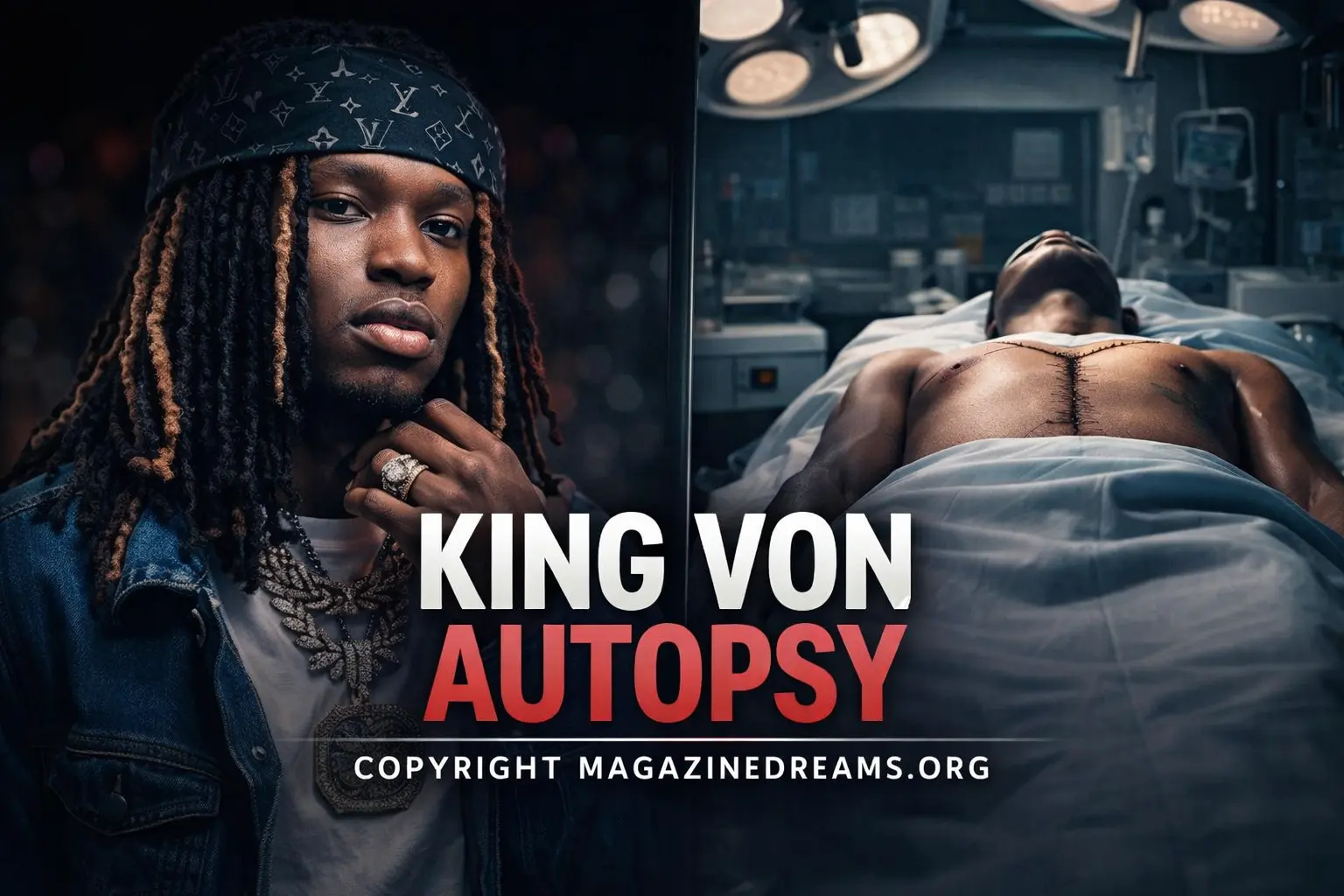
Unveiling the Facts Surrounding the King Von Autopsy
The King Von Autopsy, medically known as a post-mortem inspection, is a detailed medical examination conducted to determine the cause of death and manner of death of the Chicago rapper, King Von. This examination involves external and internal inspections, toxicology checks, and ballistic correlation to provide an objective medical judgment. The benefits of the King Von Autopsy include providing crucial evidence for legal investigations, offering closure to the public, and ensuring accurate recording of the details surrounding his death. It has main uses for homicide investigations, forensic pathology, and informing public perception. The main parts include external inspection, internal inspection, toxicology check, and ballistic correlation performed by legal-medical pathologists. Understanding the King Von Autopsy is necessary for a complete picture of the events surrounding the Atlanta shooting and the legal ramifications that followed.
The Immediate Aftermath and Initial Reports
Following the widely publicized Atlanta shooting incident that led to King Von’s death, there was a high demand for official confirmation of the circumstances surrounding his passing. Law enforcement agencies initially released limited details, adhering to standard protocols for ongoing investigations. The King Von Autopsy, a standard procedure in any homicide investigation, quickly became a focal point of media attention. Initial reports often relied on witness accounts and preliminary police statements.
The autopsy, or post-mortem inspection, aims to determine the precise cause of death and manner of death. In high-profile cases like King Von’s, the results carry significant weight, both legally and for the public record. While the full, unredacted King Von Autopsy report is generally accessible only to legal and medical personnel, key elements are often disclosed through official channels or legal proceedings. These disclosures help to clarify the events. Expert analysis of these revealed elements is crucial for accurate reporting.
The Mechanics of the Post-Mortem Examination
A comprehensive King Von Autopsy involves a series of precise medical examinations. The primary goal is to identify the exact injuries sustained by the deceased. In cases involving projectile trauma, this requires careful documentation of each entry and exit wound, as well as tracing the path of the bullets through the body. Legal-medical pathologists are the medical professionals tasked with this critical work.
The analysis typically includes:
- External Inspection: A detailed visual evaluation of the body, noting the location, size, and characteristics of all visible trauma. This includes documenting the presence and type of any abrasions, contusions, or, in this context, gunshot wounds.
- Internal Inspection: This stage involves the systematic opening and examination of the major body cavities and organs to assess internal trauma.
- Toxicology Check: Samples of blood, urine, and sometimes tissue are collected to detect the presence of any drugs or alcohol, which could influence the circumstances surrounding the incident.
- Ballistic Correlation: If bullets are recovered, they are meticulously measured and recorded before being submitted for further forensic analysis to potentially match them to a specific firearm.
The ultimate goal of the King Von Autopsy is to provide a clear determination of the cause of death and the manner of death. The cause of death is the specific medical explanation, e.g., multiple gunshot wounds, while the manner of death is the classification of the incident, e.g., homicide, suicide, accident, natural causes, or undetermined.
Public Disclosures Versus Confidential Medical Records
It’s important to distinguish between publicly released summaries related to the King Von Autopsy and the complete medical documentation. In the United States, autopsy reports, particularly those linked to active or recently concluded criminal investigations, are often protected from public access under various non-disclosure laws and law enforcement regulations. This confidentiality is intended to maintain the integrity of the legal process and to prevent undue influence or bias.
However, the media and the public are often provided with sanitized information, typically confirming the preliminary findings. For King Von, reports later confirmed that his death was ruled a homicide resulting from multiple gunshot wounds. This confirmation from the medical medicolegal office provided a factual basis for subsequent legal proceedings and public discussion. As noted in similar media articles, “The official King Von Autopsy details, even in overview, serve as the steadfast medical base upon which all other reports must be built.”
For instance, the judicial pathologist’s role extends beyond simply stating the cause of death. They must meticulously log evidence that could be used in court, such as the distance from which the shots were fired or whether there were defensive wounds present. While the exact details of the King Von Autopsy remain largely confidential, the public confirmation of homicide underscores the severity of the criminal act.
The Role of the Coroner or Medical Examiner
In most jurisdictions where such incidents occur, a Coroner or Medical Examiner’s office takes possession of the deceased for the post-mortem inspection. This entity operates independently of the primary law enforcement agency to ensure an objective medical judgment. The King Von Autopsy falls under the purview of this independent authority.
Key responsibilities of the Medical Examiner in this setting include:
- Securing and documenting the body’s chain of custody, a critical legal requirement for all evidence.
- Performing the examination to determine the medical facts.
- Issuing the official cause of death report.
- Providing expert testimony, if required, in any subsequent legal proceedings.
The thoroughness of the King Von Autopsy directly influences the subsequent police investigation and the prosecution’s ability to obtain a conviction, should indictments be levied. A well-executed autopsy leaves little room for ambiguity regarding the physical injuries sustained.
Analyzing Publicly Confirmed Injury Data
While the full autopsy report remains restricted, media reports, often citing law enforcement sources close to the case, have consistently indicated the presence of multiple gunshot wounds. The critical distinction that the autopsy clarifies is the fatal nature of these specific injuries. It is the forensic specialist’s job to link the wounds to the ultimate cessation of life functions.
For example, if the King Von Autopsy revealed that one specific injury—perhaps one affecting a major organ or artery—was immediately deadly or the primary contributor to the death, this information is vital for investigators mapping the sequence of events. The precise number and location of the wounds, documented in the autopsy, corroborate witness reports while simultaneously providing objective medical evidence. This comparison between subjective testimony and objective medical evidence forms the bedrock of many criminal prosecutions.
Legal Ramifications and Evidentiary Value
The King Von Autopsy report is perhaps the single most crucial piece of physical evidence in any legal litigation stemming from the incident. Its integrity must be maintained throughout the entire investigative and legal timeline. Any challenge to the autopsy’s conclusions would require a separate, independent medical examination, often termed a “second opinion” autopsy, which is uncommon but not unheard of in high-profile cases.
Defense representatives, should they choose to contest the state’s prosecution, would meticulously scrutinize the autopsy for any procedural errors or areas of doubt. The precise language used by the pathologist—for example, distinguishing between “fatal” and “contributing” injuries—can have major implications for determining responsibility and the specific charges that can be pursued. The clarity surrounding the King Von Autopsy, even if limited, is thus a linchpin of the legal framework surrounding his unexpected death.
Public Perception and Medical Ethics
The public’s intense desire for every detail of the King Von Autopsy reflects a broader cultural trend where the private medical details of celebrity deaths become immediate public domain. Medical ethics, however, place a high value on the privacy of the deceased and their loved ones. This creates an inherent tension between the media’s duty to inform and the medical field’s duty to maintain confidentiality.
As forensic ethicists have noted regarding such high-profile matters, “The autopsy is a hallowed medical file. While the public has a right to know the manner of death for closure and public protection, the personal physical intricacies must be kept secret until they are deemed absolutely necessary for the judicial process. Releasing too much too quickly can threaten investigations and violate the respect of the deceased and their family.”
This delicate balance means that the information surrounding the King Von Autopsy is often revealed in carefully measured doses, aligning with court rulings or official police reports. The public must rely on these official summaries to satisfy their curiosity regarding the verifiable facts of the rapper’s premature passing.
Conclusion: A Medical Record in the Public Eye
In summary, the King Von Autopsy represents a critical medical document that officially verified his death as a homicide resulting from multiple gunshot wounds. While the entirety of the report remains confidential due to ongoing investigative imperatives and privacy considerations, the disclosed elements provide the unbiased foundation for understanding the tragic event. The thorough medical review performed ensures that the details of his final moments are accurately recorded within the official record, serving as a stark testament to the effects of violence within the hip hop news industry.