Why I’m Building Capabilisense: A Capability-First Way of Thinking
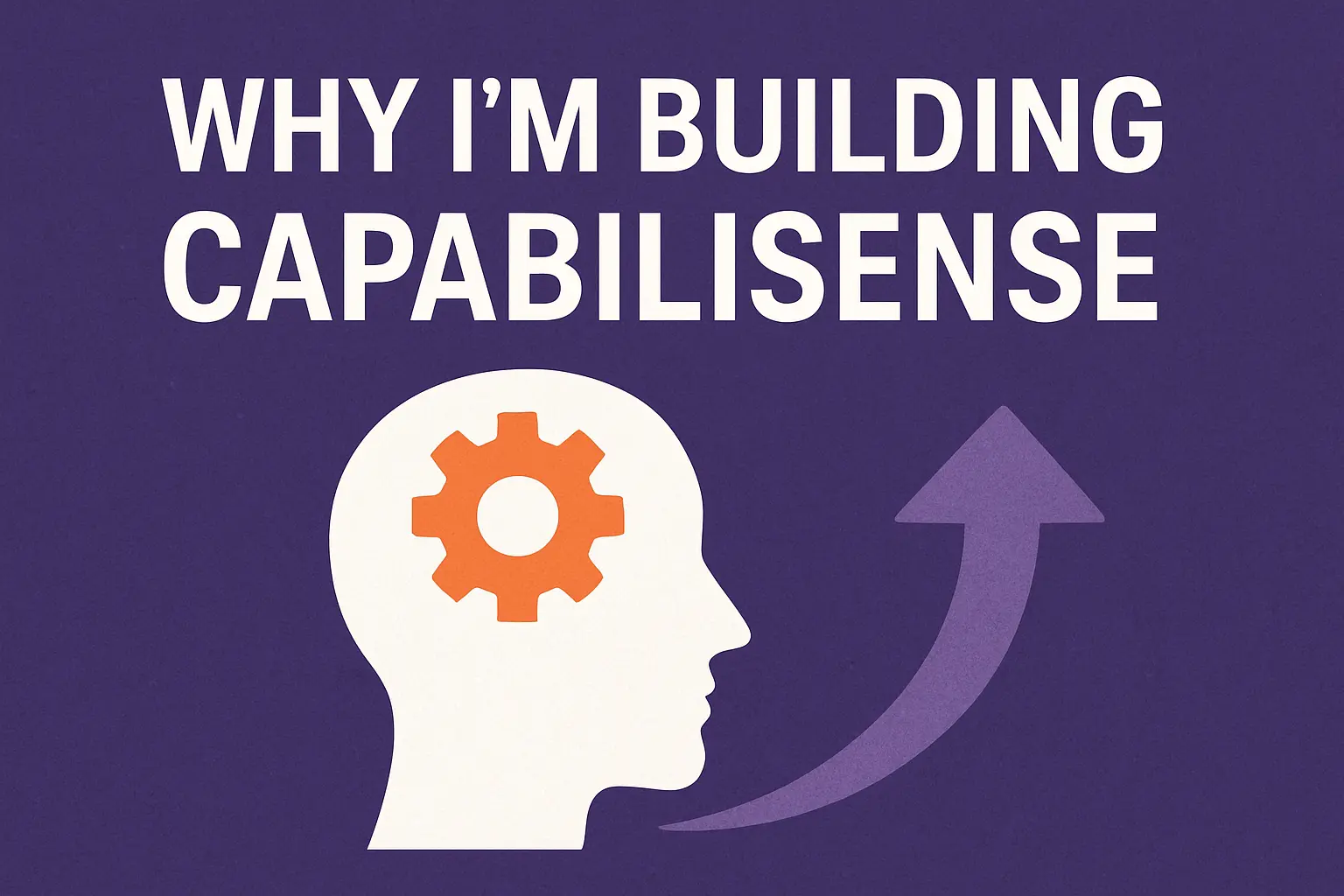
Building Capabilisense did not start as a business idea. It started as a realization. Over years of working in fast-moving digital environments, I noticed a clear pattern: people with many skills often struggled, while those with strong capabilities adapted, led, and grew consistently. This gap between knowing and being able to apply is what pushed me to build Capabilisense.
Capabilisense is my response to a world where learning faster is no longer enough. What matters now is building the right capabilities that compound over time.
Why Capability Building Matters in Today’s World
Today’s world rewards adaptability more than expertise. Job roles change, tools evolve, and industries reshape themselves quickly. In this environment, static skills lose value fast. Capability building matters because it focuses on how people think, respond, and grow in uncertain conditions, not just what they know at a single point in time.
I have seen talented professionals fall behind simply because their learning was not transferable. Capabilities, on the other hand, travel with you across roles, industries, and challenges.
Skills Are Not Enough Anymore: Capabilities as the New Currency
Skills are task-based. Capabilities are system-based. A skill might help you complete an assignment, but a capability helps you solve unfamiliar problems repeatedly. This is why capabilities are becoming the new currency in careers and organizations.
When I relied only on skills, my progress was fragile. When I started building capabilities like decision-making, learning agility, and execution under pressure, my growth became sustainable.
How Capability-Building Makes You Future-Ready
Capability-building prepares you for roles that do not exist yet. Instead of training for one outcome, it strengthens your ability to learn, unlearn, and relearn. This future-ready mindset is central to Capabilisense.
I designed Capabilisense around the idea that the future belongs to those who can navigate change calmly and strategically, not those who chase every new trend.
From Problems to Growth: The Transformational Power of Capabilities
Problems feel different when you have strong capabilities. Instead of obstacles, they become data points for growth. Capability-building changes how you interpret failure, pressure, and complexity.
This shift transformed how I approached setbacks. Each challenge became a chance to refine my systems, not question my worth.
Building Capabilities for Better Leadership
Leadership is not a position; it is a capability. People who build capabilities naturally influence outcomes, regardless of formal authority. They communicate clearly, make better decisions, and take ownership.
Capabilisense emphasizes leadership as a daily practice, not a promotion milestone. I have led teams without titles simply because capability earns trust.
Developing a Personal Competitive Advantage Through Capabilities
Your real competitive advantage is not what you know, but how you apply what you know under changing conditions. Capabilities create differentiation that cannot be easily copied.
In my own journey, capabilities helped me stand out in crowded spaces where many people had similar technical skills but lacked execution depth.
How Capability-Building Improves Knowledge Transfer & Business Transformation
Knowledge without capability stays stuck. Capability-building ensures that learning translates into action. This is critical for business transformation, where strategy fails if teams cannot operationalize it.
Capabilisense focuses on turning insight into behavior, and behavior into results.
Organizational Benefits of a Strong Capability Framework
Organizations with strong capability frameworks adapt faster, retain talent longer, and execute strategy more effectively. They reduce dependency on individuals and build resilient systems.
I built Capabilisense to help organizations move from fragmented training to cohesive capability development.
Core Elements of Effective Capability Building Programs
Effective programs are practical, contextual, and measurable. They focus on real-world application, not abstract theory. Capability-building must align with actual work, not generic models.
This principle guides every framework inside Capabilisense.
Needs Assessment & Customization: Building What Actually Matters
Capability-building fails when it ignores context. Needs assessment ensures that efforts focus on what actually matters, not what sounds impressive.
Capabilisense starts by identifying real gaps before designing any solution.
Blended Learning Approaches That Strengthen Capabilities
No single method builds capability alone. Blended learning, combining practice, feedback, reflection, and real execution, creates lasting change.
This approach reflects how I learned most effectively in my own work.
Measuring ROI: How to Track Real Capability Growth
Real ROI is visible in better decisions, faster execution, and improved outcomes. Measuring capability growth requires looking beyond certificates to behavior and performance.
Capabilisense prioritizes impact over activity.
Why “I’m Building Capabilities” Really Means “I’m Becoming Who I Need to Be”
At its core, building capabilities is an identity shift. It is about becoming resilient, adaptable, and intentional. Capabilisense represents this belief in action.
I am building Capabilisense because I am still building myself, and I know many others are on the same path.