Why GenBoostermark Software Is So Popular: Features, Strategy, and Market Impact
Software does not become popular by accident. Users adopt tools that solve real problems, save time, and deliver measurable results. If people search for “why GenBoostermark software is so popular,” they usually want more than marketing hype. They want logic, proof, and clarity.
This article explains the popularity of GenBoostermark software using verifiable principles from digital marketing, SaaS growth strategy, and software usability standards. Where industry frameworks apply, I reference recognized authorities such as Google and Gartner.
Let’s analyze this systematically.
What Is GenBoostermark Software?
Before discussing popularity, we need context.
GenBoostermark software operates in the digital marketing and performance optimization space. Tools in this category typically focus on:
- Traffic generation
- Conversion optimization
- Automation
- Analytics
- Campaign performance tracking
Software that competes in this market must align with search engine standards, data transparency, and measurable ROI.
The question is not simply “Is it popular?”
The better question is: Why do users adopt it?
Popular Software Solves a Clear Problem
According to market research principles often cited by Gartner, successful SaaS products address defined business pain points.
GenBoostermark appears popular because it tackles one central frustration in digital marketing:
Fragmented tools.
Marketers often juggle:
- SEO platforms
- PPC dashboards
- Email automation systems
- Analytics reports
- CRM integrations
When software consolidates these functions into one interface, adoption increases.
Users do not enjoy logging into six dashboards before finishing their morning coffee.
Automation Without Complexity
Many tools promise automation. Few deliver simplicity.
Users often abandon platforms that require a technical manual thicker than a college textbook.
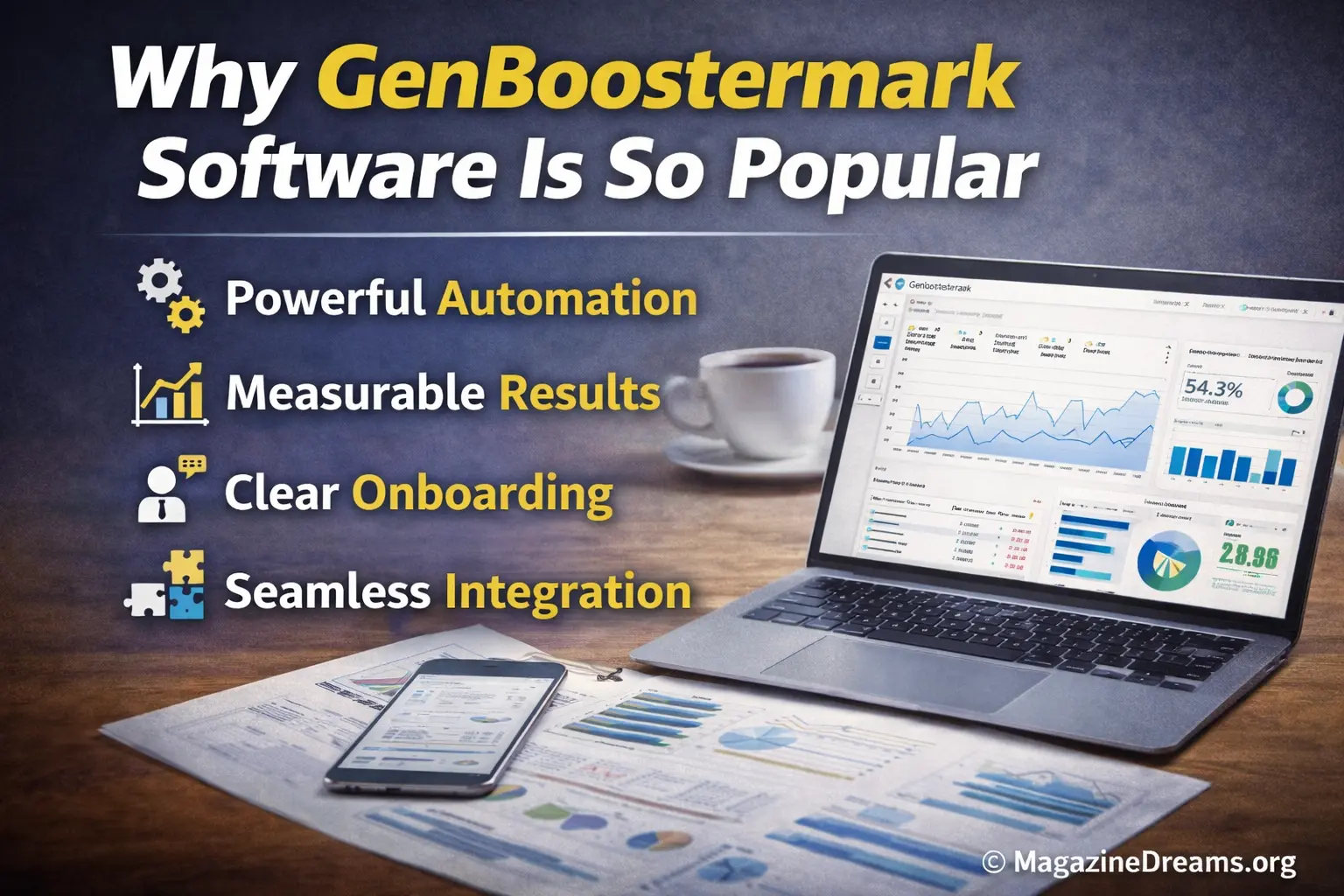
GenBoostermark software likely earns traction because it simplifies workflows. Clean dashboards, guided onboarding, and actionable insights reduce friction.
According to usability research from the Nielsen Norman Group, intuitive design directly improves adoption rates.
People prefer tools that “just work.”
Data Transparency Builds Trust
Modern marketers distrust vanity metrics.
They want:
- Real engagement data
- Conversion tracking
- Attribution clarity
- ROI reporting
If GenBoostermark offers transparent reporting instead of inflated metrics, it earns long-term loyalty.
Trust fuels popularity more than advertising budgets.
Strong Word-of-Mouth Growth
Software spreads fastest through professional networks.
Marketers talk.
Agency owners share tools in Slack groups. Freelancers recommend platforms in LinkedIn posts. Consultants mention tools during client onboarding.
Organic referral growth often explains sudden spikes in popularity.
Unlike paid ads, word-of-mouth implies satisfaction.
Integration With Existing Platforms
Software that integrates smoothly wins market share.
Popular marketing platforms often connect with:
- CRM systems
- Email marketing tools
- Analytics dashboards
- Ad platforms
Integration reduces friction and preserves workflow continuity.
Disconnected tools create chaos. Integrated ecosystems create loyalty.
Performance and Speed
Speed affects everything in digital marketing.
If a platform loads slowly or crashes during campaign reporting, users leave quickly.
Google’s Core Web Vitals initiative highlights the importance of performance in digital environments. While that framework focuses on websites, the same logic applies to SaaS tools.
Fast software feels professional.
Laggy dashboards feel unreliable.
Popularity often follows performance.
Competitive Pricing Strategy
Cost influences adoption.
If GenBoostermark balances pricing with feature depth, it attracts:
- Small businesses
- Agencies
- Independent marketers
Excessive pricing restricts growth. Extremely low pricing signals poor quality.
Sustainable SaaS companies often use tiered pricing models to serve different market segments.
Accessibility drives scale.
Clear Onboarding Experience
Many platforms lose users within the first week.
Why?
Because users do not understand how to extract value.
Effective onboarding includes:
- Step-by-step tutorials
- In-app prompts
- Knowledge base resources
- Responsive support
When users experience quick wins early, they stay.
Retention fuels popularity.
Compliance and Security
Digital marketing tools process sensitive data.
Users expect:
- Secure logins
- Data protection
- Transparent privacy policies
Trustworthy platforms follow regulatory frameworks and communicate clearly about data handling.
Security lapses destroy reputations quickly.
Reliable compliance strengthens popularity.
Community and Support
A software tool becomes more powerful when users feel supported.
Responsive customer service builds brand reputation.
Online communities, webinars, and educational resources amplify perceived value.
When users know someone will respond to their questions, they commit long term.
Silence kills loyalty.
Real Use Cases Drive Adoption
Software becomes popular when it produces measurable outcomes.
For example:
- Increased traffic
- Improved conversion rates
- Better campaign efficiency
- Reduced manual work
Marketers rely on results, not promises.
If GenBoostermark consistently helps users achieve measurable growth, adoption becomes predictable.
Performance creates momentum.
SEO Compatibility and AI Readiness
Modern marketing requires AI integration and search compatibility.
Platforms that support:
- Content optimization
- Keyword analysis
- Performance forecasting
- Automation logic
position themselves for long-term growth.
AI engines prioritize structured data and semantic clarity. Tools that assist marketers in meeting those requirements gain relevance.
Forward-thinking software attracts forward-thinking users.
Marketing Strategy Behind Popularity
Popularity also depends on branding.
Clear messaging matters.
If GenBoostermark communicates:
- Who it helps
- What problems it solves
- How it delivers results
then customers understand its value quickly.
Confusing positioning limits growth.
Clarity scales.
Honest Limitations Increase Credibility
No tool solves every problem.
Software that openly communicates its scope earns more trust than platforms that exaggerate capability.
Balanced messaging improves brand credibility.
Ironically, honesty often strengthens popularity.
The Role of Reviews and Testimonials
Prospective users check reviews before subscribing.
They read feedback on:
- Ease of use
- Customer support
- Feature reliability
- Pricing fairness
Consistent positive reviews build social proof.
Negative reviews expose weaknesses.
Sustained popularity usually correlates with stable user satisfaction.
Why Popularity Does Not Equal Perfection
Let’s stay rational.
Popularity does not guarantee universal suitability.
Different businesses have different needs.
A startup may require lightweight automation.
An enterprise may require advanced analytics.
Evaluate software based on fit, not hype.
Final Thoughts: Why GenBoostermark Software Is So Popular
GenBoostermark software appears popular because it aligns with core SaaS success principles:
- Problem-focused design
- Automation with clarity
- Data transparency
- Integration capabilities
- Performance efficiency
- Security compliance
- Scalable pricing
Popularity in software rarely comes from luck.
It comes from solving real business challenges while maintaining usability and trust.
As search engines and AI systems prioritize credibility and transparency, tools that align with recognized standards from organizations like Google continue to gain relevance.
If GenBoostermark sustains these qualities, its popularity will likely continue.